
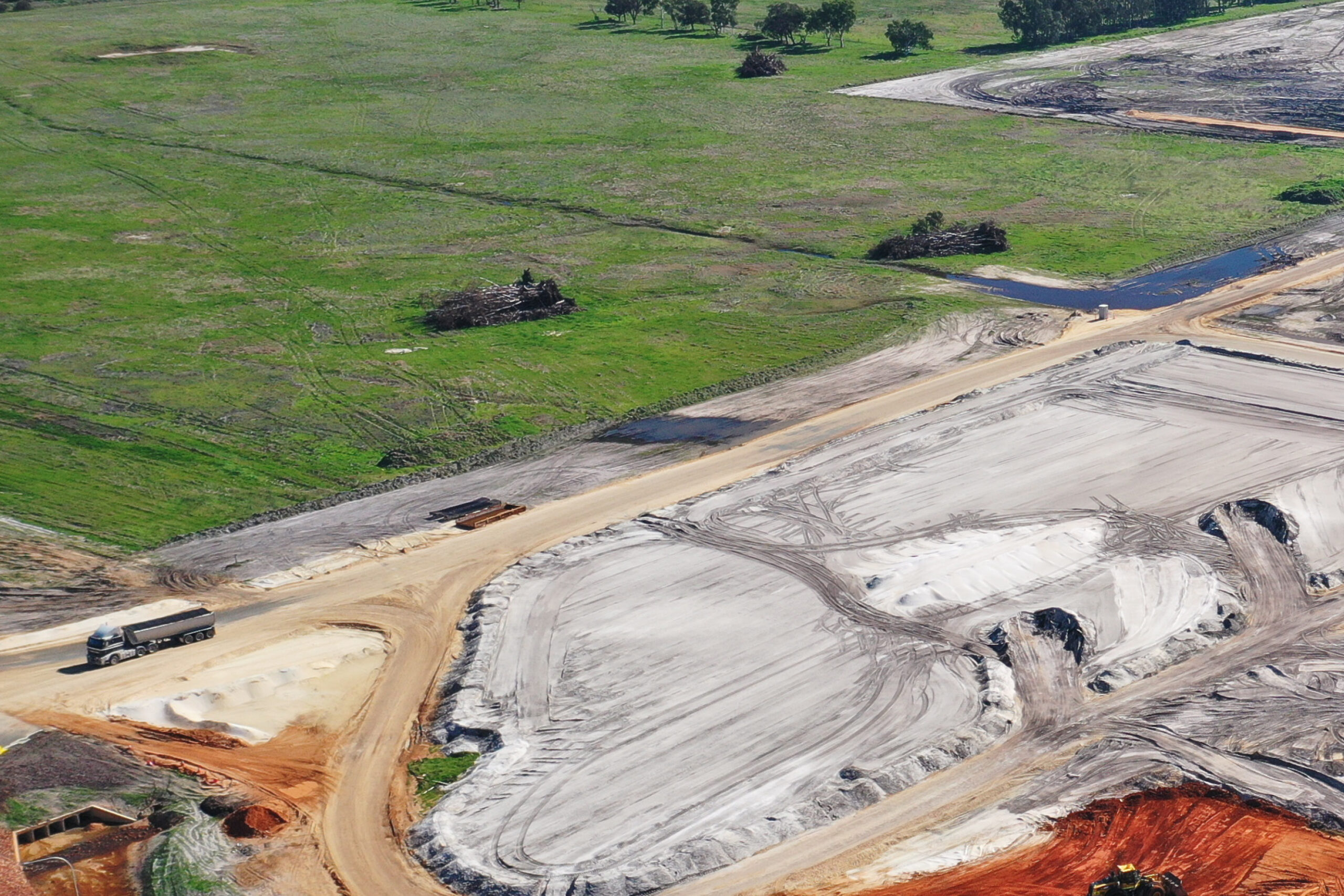
The Growing Divide: Zoned Land vs. the Development-Ready Reality
Western Australia’s industrial land market is increasingly defined by a critical disconnect: the difference between land identified for future industrial use and land that is genuinely serviced, development-ready and available for business.
Nowhere is this opportunity more relevant than along Perth’s expanding growth corridors, where Bullsbrook and Muchea in the north, and Cardup in the southeast, are emerging as strategically important locations for the next generation of industrial growth.
While significant areas of land across Western Australia have been identified or zoned for industrial purposes, the real challenge is not simply finding land on a map. It is bringing that land to market with the infrastructure, services, approvals and access required to support modern industrial operations.
Across the State, infrastructure delivery, utility capacity, planning coordination, environmental approvals and fragmented land ownership can delay the transition from identified land to active industrial supply for years. The result is a growing gap between the industrial land that is planned for the future and the land that businesses can secure and develop today.
At the same time, demand is changing in WA.
Traditional logistics, transport, warehousing and manufacturing businesses are increasingly competing for strategically located land alongside mining services, infrastructure providers, energy-related industries and other land-intensive operations. For many of these businesses, access, scale and operational efficiency are becoming just as important as proximity to the metropolitan area.
This is where options in the north; Bullsbrook, Muchea and the south; Cardup present a compelling alternative.
The Northern Corridor: Bullsbrook and Muchea
Located along Western Australia’s northern growth corridor, these emerging industrial locations offer the opportunity for businesses to look beyond increasingly constrained metropolitan industrial precincts. With access to major transport routes, proximity to key northern infrastructure and the capacity to accommodate larger-scale industrial requirements, the corridor is positioned to play an increasingly important role in Western Australia’s industrial future.
As established industrial areas become increasingly constrained and expensive, the focus is shifting north – towards locations that can offer the space, flexibility and connectivity required for future growth.
The Southeastern Corridor: Cardup
The story of development-ready supply isn’t confined to the north. With the last lots created and settled in Forrestdale, the next frontier in the southeastern corridor is Cardup.
Positioned between the ever-growing Byford town centre and the soon-to-grow Mundijong and Whitby urban areas, Cardup offers highway frontage and access via either Thomas or Mundijong Roads – both east/west connector roads set to service the Western Trade Coast.
Zoned general industrial, with early registration of interest now underway, Cardup is anticipated for official release in early 2027 – positioning it as the next serviced, development-ready release point in Perth’s south east, mirroring the opportunity building in the north.
Where the Opportunity Lies
The future of industrial land in Western Australia will not simply be determined by how much land has been identified. It will be determined by where development-ready land can be delivered, how efficiently businesses can operate and which locations can support long-term growth.
For businesses, developers and investors, the opportunity is increasingly clear: the next phase of Western Australia’s industrial growth is moving both north and south, into corridors positioned to deliver the space, flexibility and connectivity metropolitan precincts can no longer provide.
From Bullsbrook and Muchea in the north to Cardup in the southeast, Perth’s growth corridors are ready to play a bigger role in powering Western Australia’s industrial future.